
UltraPoligrindGrinding Wheels
Achieves both high die strength and gettering performance using ultra-fine diamonds
Applications: Silicon wafer, etc
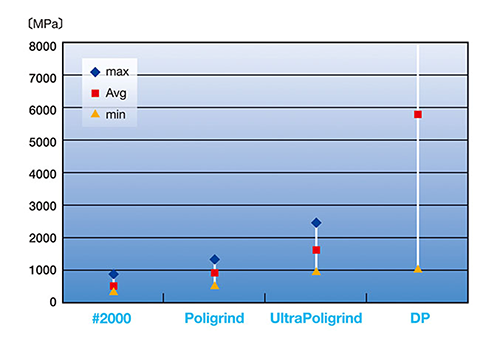
UltraPoligrind employs an ultra-fine diamond abrasive to create higher die strength and enable grinding with even less damage than Poligrind. This new finish grinding wheel is also able to maintain a gettering effect, which is often removed when a stress relief process is used. It is a chemical-free normal grinding process resulting in a low environmental impact, and allows wafer thinning with an easy to operate process.
- High die strength with little damage to wafers
- Maintains the same gettering performance as normal grinding

Experimental Data
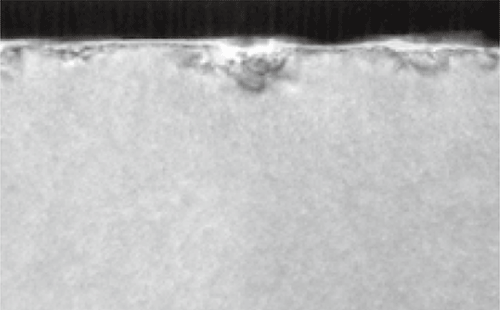
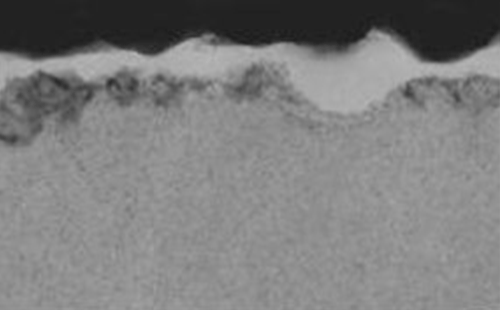
TEM comparison of wafer damage
The damaged layer of a wafer ground using UltraPoligrind is extremely small compared to that of a wafer ground using a #2000 grinding wheel.
Die strength comparison (Ball bending)
Gettering effects
The amount of precipitated Cu detected on the polished surface of a mirror wafer exceeds 1.0 E11 after a copper solution was applied to the surface. In contrast, the amount of precipitated Cu detected on the backside of a wafer polished with Gettering DP is below the detection limit, thus indicating that the surface had a gettering effect.
TXRF measurement data before and after Cu solution application (Φ8” mirror wafer)
To quantitatively measure the gettering effects, samples were contaminated with a Cu solution. The Cu was diffused at 350°C for 3 hours and then analyzed using TXRF (Total-Reflection X-ray Fluorescence). The observed Cu on the surface of the respective wafers is as seen below.
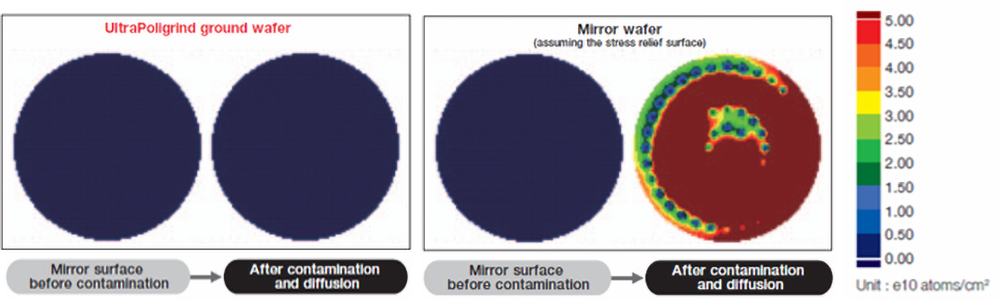
※ Detectable range at below 0.5E10 atoms/cm2
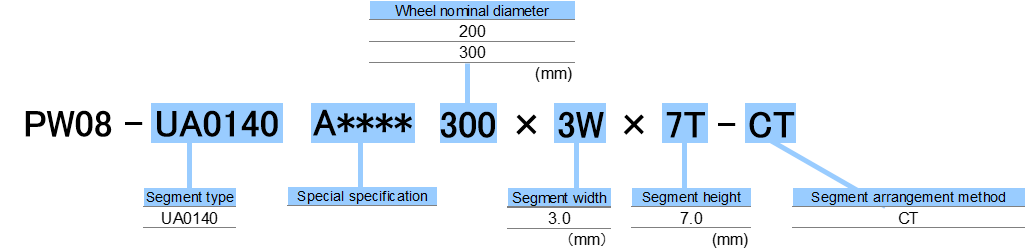
Specification
Assistance with Using UltraPoligrind
To achieve the best processing results possible with UltraPoligrind, correct formulation of the application is required. DISCO’s applications engineers will be happy to work with your workpiece and specifications to achieve the desired processing results.
UltraPoligrindGrinding Wheels
Contact
Please feel free to contact us with any questions or inquiries.
When ordering
Please contact a DISCO representative with your product needs such as type, wheel size, and quantity.
When you place the first order with us, please explain application information such as materials to grind, sizes, machine, type, and other specification.
We are ready to help you to determine which is our most appropriate product type for your application.
* Due to improvements in our products, it is possible that product specifications may be changed without
advanced notice.
Please confirm the product specifications with a DISCO representative.
To use these DISCO blades and wheels (hereafter precision tooling) safely
Please read carefully and follow the instructions below to prevent any accidents or injuries.
- USE a safety cover (nozzle case, cover), equipped as a standard accessory, to avoid injury.
- DO NOT EXCEED the specified rpm limit indicated on the precision tooling.
- FOLLOW the instruction manual of the equipment to mount the precision tooling properly.
- DO NOT DROP OR HIT the precision tooling. This may cause breakage or injury.
- Always CHECK the precision tooling for chipping or any other damage before starting to use it. DO NOT USE the tooling if there is any damage.
- READ the operation manual of the cutting/grinding equipment before use.
- DO NOT USE the precision tooling with modified or customized equipment.
- DO NOT USE precision tooling that has a different size from the one recommended for your equipment.
- DO NOT USE the precision tooling for any other purpose than grinding, cutting, or polishing.
- Always USE water or coolant to prevent precision tooling damage.